GI Endoscopy · 9 min read
Dieulafoy Lesion Hemostasis in 2026: Find the Vessel, Crush It, Do Not Inject and Leave
Mechanical first for gastric and duodenal Dieulafoy. Combination over epinephrine alone. Repeat look if the first EGD is clean.
A Dieulafoy lesion is a caliber-persistent artery bleeding through a pin-sized mucosal defect, usually on the proximal lesser curve. Treat with TTS clips or band ligation. Do not leave epinephrine as the only therapy. If clips skate off a large vessel, change to OTSC. Repeat endoscopy before TAE. Surgery is last, after the site is localized.
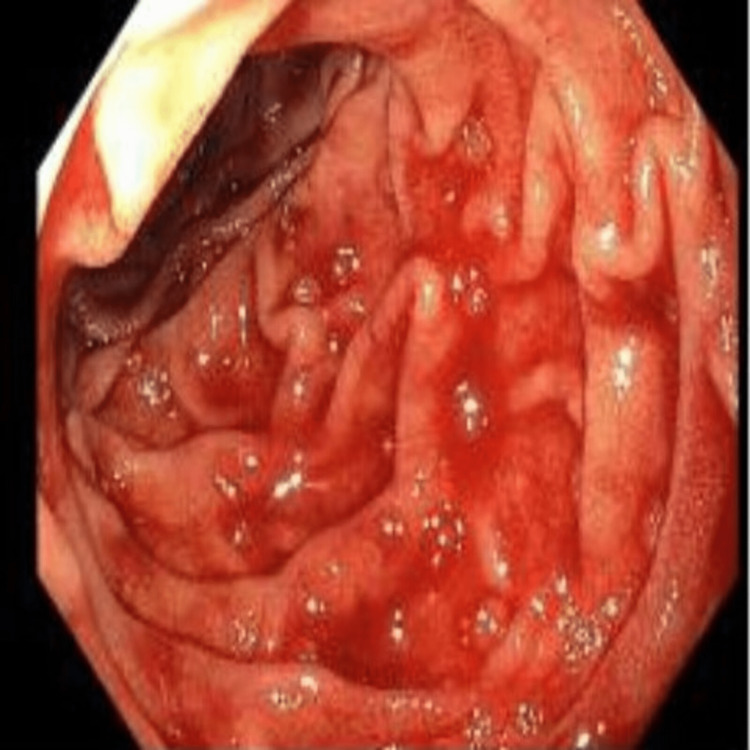
Experienced teaching points
Clinical Pearls
- Mechanical first: through-the-scope clips or band ligation. Do not leave epinephrine as the only therapy.
- Look on the proximal lesser curve within 6 to 10 cm of the GE junction. Duodenum is next. A clean first EGD after arterial hematemesis is a miss until proven otherwise.
- If TTS clips cannot capture a large-caliber vessel, change to OTSC rather than stacking failed clips.
- Repeat endoscopy before TAE. Surgery is last, after the site is localized.
- Doppler, if available, documents that arterial flow is gone. It is useful, not required as routine by ACG or ESGE.
Clinical Bottom Line
| Decision | 2026 practical answer |
|---|---|
| What is it? | A caliber-persistent submucosal artery (often 1 to 5 mm) that erodes through a tiny mucosal defect. The surrounding mucosa looks normal. This is not a peptic ulcer crater. |
| Where do I look first? | Lesser curve of the proximal stomach within 6 to 10 cm of the GE junction. Duodenum is the next most common site (about 15% in mixed series). Esophagus, small bowel, and colon are less common but real. |
| Why did the first EGD miss it? | The defect is pin-sized, bleeding is intermittent, and clot hides the vessel. A "normal" index EGD after arterial hematemesis is a reason to look again, not a reason to stop. |
| First-line therapy | Mechanical: through-the-scope clips or endoscopic band ligation. ESGE [1]'s Dieulafoy-specific recommendation also allows thermal or combination (epinephrine plus a second modality). Do not leave epinephrine as the only treatment. |
| When to reach for OTSC | When TTS clips cannot capture a large-caliber vessel, when the approach is awkward, or when bleeding recurs after standard hemostasis. One RCT that included Dieulafoy lesions found 30-day rebleeding of 4% with OTSC versus 29% with standard therapy. |
| If endoscopy fails | Repeat endoscopy first. Then transcatheter arterial embolization. Surgery is last, after the site is localized. |
What do the societies say?
Do not walk away after epinephrine injection. Do not stack failed TTS clips on a large-caliber artery when OTSC is available.

What am I actually treating?
Dieulafoy described exulceratio simplex in 1898. The modern definition is a caliber-persistent artery that fails to taper as it reaches the mucosa. At the bleeding point the vessel is often 1 to 5 mm across, roughly ten times the expected caliber at that level. Histology shows a small mucosal defect without a peptic ulcer crater, aneurysm, or vasculitis.
That anatomy explains the endoscopy. You are looking for a high-pressure artery poking through a pin-hole, not a Forrest crater. If you treat it like a garden-variety ulcer with epinephrine and a light thermal pass, you have not crushed the vessel.
It accounts for about 1% to 2% of acute GI bleeding and up to about 6% of nonvariceal upper GI bleeding. Older surgical series quoted mortality near 80%. With endoscopic mechanical therapy, reported mortality is closer to 8% and in line with other causes of GI bleeding. The remaining deaths are usually from delayed diagnosis, injection-only therapy, or failed localization.
Where should I look first?
About 70% of lesions are gastric. Of gastric lesions, 80% to 95% sit within 6 to 10 cm of the GE junction, usually along the lesser curve, where branches of the left gastric artery reach the mucosa without the usual submucosal plexus. Mixed reviews put the duodenum next at about 15%, then esophagus around 8%. Distal stomach, small bowel, and colorectum are documented but less common.
Emergency gastroduodenal series can look more duodenal than textbooks. In a 133-patient Chinese series of gastroduodenal Dieulafoy bleeds, the gastric body was still first (48.9%), but the duodenum accounted for 23.4%. That is case-mix, not a new anatomy rule. The treatment rule does not change: find the vessel, capture it mechanically, and do not stop because the index EGD looked "clean."
Duodenal banding is not free. Some duodenal case reports prefer clips because band ligation has been linked to perforation and delayed bleed when deep mural tissue is captured in a thin-walled duodenum. If you band in the duodenum, know why, and have a salvage plan.
How do I diagnose it on a bloody night?
Use the standard endoscopic criteria:
- Active arterial spurting or micropulsatile streaming from a minute (<3 mm) mucosal defect, or through otherwise normal mucosa.
- A protruding vessel with or without bleeding in that tiny defect.
- A densely adherent clot with a narrow attachment to a minute defect or to normal-appearing mucosa.
Index EGD finds it in roughly half to two-thirds of cases. A second look is common. Reasons for a miss are excessive blood (about 44% in older series) or the tiny size of the lesion (about 56%). Practical moves that help:
- Resuscitate first. ACG suggests endoscopy within 24 hours after stabilization, not a crash EGD while the patient is still hypotensive, unless they remain unstable despite resuscitation.
- Erythromycin before endoscopy when clot is likely, per the ACG UGIB pathway.
- A distal cap, water jet, and position change. Roll the lesser curve and the duodenal sweep slowly.
- Do not call a "normal" EGD after witnessed arterial hematemesis a negative workup. Schedule the second look.
- If the lesion is found in a bloody field, tattoo or clip-mark it before you lose it.
EUS can show a tortuous submucosal artery. Angiography is for failed endoscopy or an inaccessible site, not the first diagnostic test in a patient who can be scoped.
What therapy actually holds?
| Modality | What the data support | Busy-list use |
|---|---|---|
| TTS clip | Primary hemostasis about 91% in the Barakat meta-analysis (87 patients). Park's small RCT (n=26) had 13/13 primary hemostasis with clips or bands. | Default when you can face the vessel en face and grab a cuff of wall. |
| Band ligation | Primary hemostasis about 96% (75 patients). Rebleed 6% versus 17% for clips in the same meta-analysis; the difference was not statistically significant. | Useful on the posterior proximal body and cardia. Pause in the duodenum because of perforation reports. |
| Combination (epi plus mechanical or thermal) | Lai 2020: 30-day rebleed 11% with combination versus 45% with injection alone in 133 gastroduodenal cases. | Epinephrine is a visual aid. The second modality is the treatment. |
| Injection alone | Independent risk factor for 30-day rebleed. Same series: 45% rebleed. | Do not stop here. This is the most important avoidable failure. |
| OTSC | Jensen [9] RCT of ulcers or Dieulafoy (n=53): 30-day rebleed 4% versus 29%, NNT 4. Barkun 2023 (n=190 NVUGIB, not Dieulafoy-only): 3.2% versus 14.6% further bleeding. | Reach for it when TTS purchase is poor, the vessel is large, or standard therapy already failed. |
| Thermal (bipolar, heater, APC) | ESGE 2015 lists thermal as acceptable. Superficial charring often under-treats a 1 to 5 mm artery. | Acceptable if you can coapt the vessel. Inferior to mechanical capture for most Dieulafoy anatomy. |
ESGE 2015 recommendation 28 is still the Dieulafoy-specific sentence in European guidance: thermal, mechanical (hemoclip or band), or combination. TAE or surgery if endoscopy fails. The 2021 and 2026 ESGE ulcer updates did not rewrite that sentence, but they did move cap-mounted clips earlier for large-vessel, high-risk bleeding. ACG 2021 has no Dieulafoy GRADE item. Apply the ulcer pathway analogously: no epinephrine monotherapy, treat active bleeding and visible vessels, high-dose PPI after high-risk hemostasis, repeat endoscopy for recurrent bleed, TAE before surgery.
Restrictive transfusion (7 g/dL for most patients) still applies. Dieulafoy bleeds can be abrupt and large. Transfuse for shock, coronary disease, or ongoing hemorrhage, not to an arbitrary 9 to 10 g/dL in an otherwise stable patient.
Is Doppler required?
Dieulafoy is a large submucosal artery. Residual Doppler flow after "successful" therapy predicts rebleeding. Jensen's 2017 RCT of severe NVUGIB (148 patients, 19 Dieulafoy) cut 30-day rebleeding from 26.3% to 11.1% with Doppler-guided treatment. Nulsen's Dieulafoy-only CURE cohort (n=82) found matched 30-day rebleeding of 2.6% with Doppler versus 25.3% with visual guidance.
ESGE 2026 could not reach consensus for routine Doppler in peptic ulcer stigmata. If you have the probe, use it to prove the artery is dead. If you do not, mechanical capture plus a planned second look in high-risk patients is the substitute.
What do I do tonight?
- Resuscitate. Restrictive transfusion unless the patient is in shock or has ischemic heart disease. Start a PPI infusion once high-risk UGIB is obvious.
- EGD with a cap after the patient is stable enough. Inspect lesser curve, cardia, and the duodenal sweep as if you expect to miss a 2 mm defect.
- If you see clot attached by a narrow pedicle, inject dilute epinephrine around it to clear the field, lift the clot, and treat the vessel. Do not walk away after the injection.
- Place TTS clips across the vessel and a cuff of wall, or band it if the anatomy favors a ligator and you are not in a thin-walled duodenum.
- If clips skate off a large-caliber artery, change to OTSC rather than stacking failed TTS clips.
- If the first EGD is negative after true arterial hematemesis, repeat. If two EGDs fail, go to angiography with intent to embolize.
- Surgery is wedge resection after localization. Blind subtotal gastrectomy is a 1970s answer.
Pitfalls
| Pitfall | Better move |
|---|---|
| Calling a clean first EGD negative | Intermittent arterial bleed plus a pin-hole lesion. Repeat with a cap. |
| Epinephrine monotherapy | 45% 30-day rebleed in Lai's gastroduodenal series. Always add mechanical or thermal therapy. |
| Treating it like a peptic ulcer crater | There is no crater. You need vessel capture, not mucosal blanching. |
| Banding the duodenum without a plan | Clips are usually safer there. If you band, know the perforation reports. |
| No mark, no photo, no report of location | The next endoscopist, IR, or surgeon cannot help you. |
| Stacking TTS clips on a vessel you cannot face | Change to OTSC or get IR involved. |
Selected references
- Gralnek IM, et al. ESGE Guideline: diagnosis and management of NVUGIH. Endoscopy. 2015. Dieulafoy recommendation 28.
- Gralnek IM, et al. ESGE NVUGIH Guideline Update. Endoscopy. 2021.
- ESGE. Endoscopic diagnosis and management of peptic ulcer bleeding. Update 2026.
- Laine L, Barkun AN, Saltzman JR, Martel M, Leontiadis GI. ACG Clinical Guideline: Upper Gastrointestinal and Ulcer Bleeding. Am J Gastroenterol. 2021.
- ASGE Technology Committee. Devices for endoscopic hemostasis of nonvariceal GI bleeding. VideoGIE. 2019.
- Park CH, et al. EBL versus hemoclip for bleeding gastric Dieulafoy's lesions. Endoscopy. 2004.
- Ahn DW, et al. Hemoclip versus band ligation for Dieulafoy's lesions. Gastrointest Endosc. 2012.
- Barakat M, Hamed A, Shady A, Homsi M, Eskaros S. EBL versus hemoclip for Dieulafoy's lesion: a meta-analysis. Eur J Gastroenterol Hepatol. 2018.
- Jensen DM, et al. OTSC versus standard hemostasis as initial treatment of severe NVUGIB. Clin Gastroenterol Hepatol. 2021.
- Barkun AN, et al. OTSC versus standard endoscopic treatment as initial therapy in NVUGIB. Ann Intern Med. 2023.
- Jensen DM, et al. Doppler endoscopic probe monitoring in severe NVUGIB. Gastroenterology. 2017.
- Nulsen B, Jensen DM, et al. Outcomes in severe UGIB from Dieulafoy's lesion with arterial flow monitoring. Dig Dis Sci. 2020.
- Jeon HK, Kim GH. Endoscopic management of Dieulafoy's lesion. Clin Endosc. 2015.
- Nojkov B, Cappell MS. Gastrointestinal bleeding from Dieulafoy's lesion. World J Gastrointest Endosc. 2015.
- Baxter M, Aly EH. Dieulafoy's lesion: current trends in diagnosis and management. Ann R Coll Surg Engl. 2010.
- Lai Y, et al. Risk factors for rebleeding after emergency endoscopic treatment of Dieulafoy lesion. Can J Gastroenterol Hepatol. 2020.
- Qasim A, et al. Dieulafoy's lesion of the duodenum. Cureus. 2023.
- Villanueva C, et al. Transfusion strategies for acute upper gastrointestinal bleeding. N Engl J Med. 2013.
- Sung JJY, et al. Asia-Pacific working group consensus on NVUGIB. Gut. 2018.
Last reviewed September 20, 2026. Written for clinicians treating intermittent arterial upper GI bleeding from a pin-sized mucosal defect, including duodenal Dieulafoy.
Questions doctors ask
Is epinephrine enough for a Dieulafoy lesion?
No. Inject only to clear the field. Mechanical therapy (TTS clip or band) is first-line. Leaving epinephrine as monotherapy is a rebleed plan.
Where should I look first?
Proximal lesser curve within 6 to 10 cm of the GE junction. Duodenum is next (about 15% in mixed series). A clean first EGD after arterial hematemesis is a miss until proven otherwise.
When do I switch from TTS clips to OTSC?
When clips skate off a large-caliber vessel. Change to OTSC rather than stacking failed TTS clips. Angiography is for failed endoscopy, not the first mechanical upgrade.
Is Doppler required?
No. ACG and ESGE do not require routine Doppler. If available, it documents that arterial flow is gone after therapy.
For your teaching file
Save this article as a PDF
Drop your email and we'll open a print-ready version you can save as a PDF — and you'll start getting our weekly GI endoscopy newsletter.