Topics Hemoclips & Hemostasis
Hemoclips & Hemostasis
Through-the-scope and over-the-scope clips, gold probe, and other endoscopic hemostasis devices.
10 articles
Mechanical and thermal hemostasis devices form the core of endoscopic bleeding control. Modern operators choose among several modalities based on lesion type, vessel size, location, and access angle — combination therapy (mechanical or thermal plus dilute epinephrine injection) is more effective than single-modality treatment for high-risk peptic ulcer bleeding.
Through-the-scope (TTS) clips apply rotation, opening, and closure under endoscopic control. They are first-line for visible vessels in non-fibrotic ulcers, post-polypectomy bleeding, Mallory-Weiss tears, and small Dieulafoy lesions. Multi-clip closure of mucosal defects after EMR or perforation is also a routine application. Over-the-scope clips (OTSC) apply far stronger compressive force than TTS clips and capture deeper tissue; they are used for refractory bleeding in fibrotic ulcers, large Dieulafoy lesions, anastomotic dehiscence, and acute perforations. Once an OTSC is placed, the field is altered — TTS clips can be added but the OTSC itself is not easily revisable.
Thermal modalities — bipolar (gold probe) and monopolar coagulation, argon plasma coagulation, and contact heater probes — coagulate vessels by heat-induced protein coagulation. They are particularly suited to angiodysplasias and oozing capillary-bed bleeding. Thermal therapy in the right colon and at thin-walled lesions requires cautious settings because of perforation risk.
Articles
 Over-The-Scope Clips in Upper GI Bleeding: Where OTSC Outperforms Standard Hemostasis in 2026 An evidence-based review of OTSC in upper GI bleeding, including lesion selection, randomized data, technical pitfalls, and when to escalate beyond endoscopic therapy.
  Through-the-Scope Hemoclips in 2026: What to Deploy Tonight, When to Close a Defect, and When TTS Is Not Enough TTS clips for ulcer hemostasis and polypectomy defect closure. Materials and MR labeling, named clip-closure trials, and when to escalate to OTSC without restating that article.
 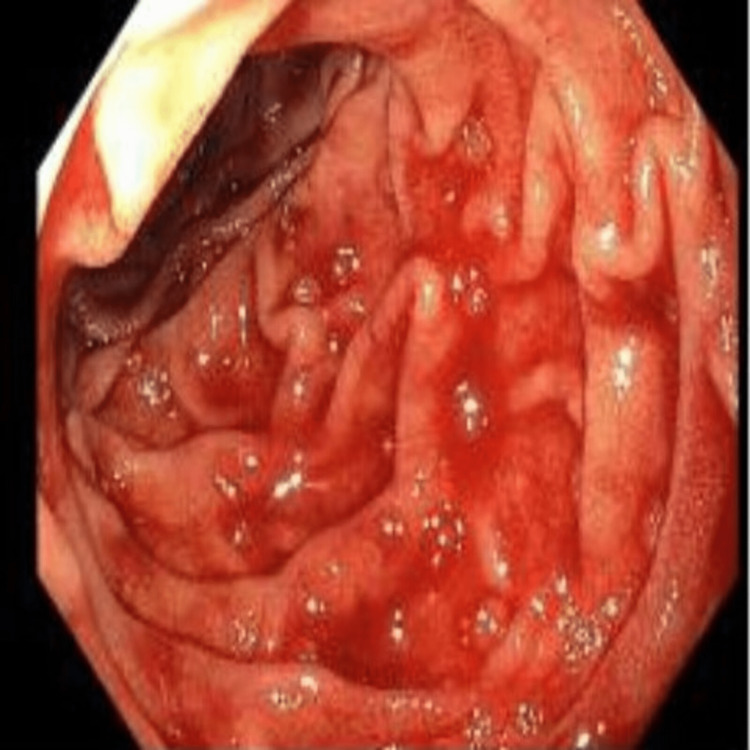 Dieulafoy Lesion Hemostasis in 2026: Find the Vessel, Crush It, Do Not Inject and Leave Mechanical first for gastric and duodenal Dieulafoy. Combination over epinephrine alone. Repeat look if the first EGD is clean.
  Over-The-Scope Clips (OTSC): Defect Closure Mechanisms Over-The-Scope Clips (OTSC): Gastrointestinal Perforations and Leaks (2026) Padlock Clips vs. OTSC: Advanced Defect Closure Comparisons Endotherapy Devices: A 2026 Guide to Biliary Stents and Hemostasis Clips
  Prophylactic Clip Closure After Polypectomy in 2026: When It Helps, When It Does Not, and What CLIPPER Changed Named trials (CLIP, Albeniz, Gupta, CLIPPER) plus AGA, ESGE, and USMSTF. Complete closure of large proximal EMR defects, not routine clips on small polypectomy sites.
  Esophageal Perforation: Mechanisms and Endoscopic Salvage
  Adverse Events in Colonoscopy: Perforation Management